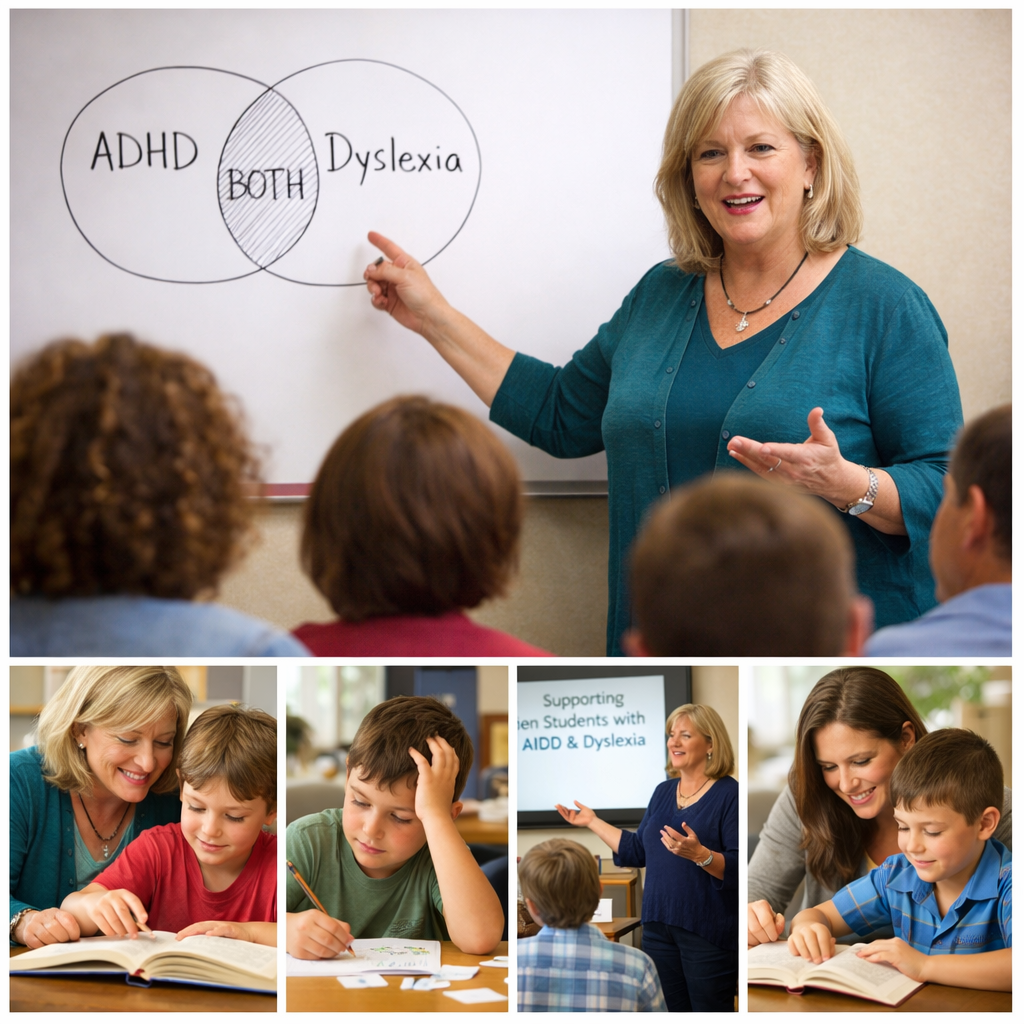
ADHD and dyslexia are two of the most common neurodevelopmental differences in children—and they frequently occur together. When they do, the challenges a child faces in learning to read can become layered and complex. Understanding how these differences interact is essential, not only for supporting students effectively, but for shaping how we view their struggles with empathy rather than frustration.
One of the reasons I am so passionate about this topic is because I have had the privilege of hearing my director, Leta Palmiter, teach on it. Every time she speaks about ADHD and dyslexia, I walk away with a deeper understanding and renewed respect for how thoughtfully these children must be supported. She has an incredible ability to explain complex learning differences in a way that is both accessible and empowering—and it is truly a joy to learn from her.
Understanding the Different Types of ADHD
There are three primary types of ADHD, and each one can uniquely interfere with reading development—especially when dyslexia is present.
ADHD – Predominantly Inattentive Type
This type is often misunderstood because it is quieter and less disruptive.
Children with inattentive ADHD may struggle to sustain focus, follow directions, or stay organized. When dyslexia is also present, reading becomes even more demanding. Decoding requires sustained attention and mental effort, and these students may understand phonics concepts but struggle to apply them consistently. As Leta often explains, these are the children who are working hard internally, even when it looks like they are disengaged.
ADHD – Predominantly Hyperactive-Impulsive Type
This type is more outwardly noticeable and often misunderstood as purely behavioral.
These students may have difficulty sitting still, waiting their turn, or slowing down. When paired with dyslexia, this impulsivity can lead to guessing words, skipping lines, or rushing through reading tasks. Reading already feels challenging; adding impulsivity can cause frustration to build quickly. Leta does an excellent job of reminding us that these behaviors are not defiance—they are signs of a nervous system that is struggling to regulate.
ADHD – Combined Type
This is the most common presentation and includes features of both inattentive and hyperactive-impulsive ADHD.
For students with both dyslexia and combined-type ADHD, reading can feel overwhelming on multiple levels. They may struggle to focus, regulate emotions, and persist through difficult tasks. Without appropriate support, these students are at higher risk for anxiety, burnout, and low self-confidence. As Leta consistently emphasizes, progress happens when we address the whole child—not just the reading skill in front of us.
How ADHD Can Interfere With Dyslexia Intervention
Even when dyslexia is identified and structured literacy intervention is in place, ADHD can still interfere with progress if it is not properly supported. Attention regulation, working memory, emotional control, and stamina all play a role in reading success.
This is why I value the way Leta teaches—she never isolates dyslexia from the broader picture of how a child learns. She helps educators and parents understand that effective intervention requires awareness of both decoding skills and the brain-based challenges that affect how those skills are accessed.
Why This Matters
Children with dyslexia and ADHD are not lazy, unmotivated, or incapable. They are navigating learning with brains that simply work differently. When adults understand the overlap between these differences, the conversation shifts—from “What’s wrong?” to “What support is missing?”
Listening to Leta Palmiter teach on this topic has reinforced for me how powerful informed, compassionate education can be. When knowledge is paired with empathy, children are no longer defined by their struggles—but by their potential.
 Control Chaos Daily Grind
Leave a comment