What no one tells you about advocating in a room that wasn’t designed for your child.
You have done your research. You have read the articles, joined the Facebook groups, printed out the evaluations. You walk into that meeting knowing more about your child’s dyslexia than anyone else in that room and somehow, you still walk out feeling like you said nothing at all. That is not a failure on your part. That is a system that was not built with your child in mind. But knowing that doesn’t make it easier. So let’s talk about what actually works.
Advocacy isn’t about being the loudest voice in the room. It’s about being the most prepared one.
Document Everything Before You Even Walk In
Schools operate on paper. If it wasn’t written down, it didn’t happen. Before any meeting, start building a paper trail. Save every email. Write brief notes after phone calls date, time, who you spoke with, what was said. Keep copies of every report, every test score, every accommodation form. When you walk in with a folder, the tone of the meeting shifts. You signal that you are not going to forget what is promised.
Come With Specific Asks, Not Just Concerns
One of the most common mistakes parents make and it is completely understandable is coming to meetings with emotion and leaving without action. Emotion is valid. Your frustration, your worry, your heartbreak over watching your child struggle all of it is real and it belongs in that room. But schools respond to specifics. Instead of saying “she’s really struggling,” try “she scored in the 12th percentile in decoding I’d like to discuss adding structured literacy intervention three times a week.” The more concrete your ask, the harder it is to dismiss.
Before Your Next Meeting Prepare These
- A one-page summary of your child’s current struggles and strengths
- 3 specific, measurable accommodations you are requesting
- Any outside evaluations or reports from specialists
- A list of questions you want answered before you leave
- The name of your state’s Parent Training and Information Center (PTI)
Know the Words That Open Doors
The education system has a language, and learning even a little of it changes everything. Ask for things “in writing.” Reference your child’s right to a “Free Appropriate Public Education” under IDEA. Ask what “evidence-based reading interventions” the school is using. Request a “Prior Written Notice” if the school denies a service. You do not need a law degree. You just need to know enough to signal that you know your rights because that alone changes how you are treated.
Bring Someone With You
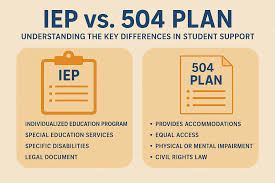
You are allowed to bring a support person to any IEP or 504 meeting. This can be a friend, a family member, another parent who has navigated the process, or a professional advocate. Having another set of ears matters. When you are emotionally activated and you will be, because this is your child it helps to have someone who can take notes, ask follow-up questions, and remind you of what you wanted to say. You do not have to walk into that room alone.
Follow Up Every Meeting in Writing
Within 24 hours of any meeting, send a brief email summarizing what was discussed and what was agreed to. Keep it factual and calm. Something as simple as: “Thank you for meeting with me today. My understanding is that we agreed to add 30 minutes of reading intervention per week beginning next Monday. Please let me know if I have misunderstood anything.” This email becomes part of the record. It creates accountability. And more often than not, things that were vague in the meeting become clear when they are written down.
You are not asking for special treatment. You are asking for what your child is legally entitled to.
When They Still Won’t Listen
Sometimes you do everything right and the school still stonewalls you. Know that you have options. You can request mediation through your state’s department of education. You can file a state complaint. You can contact your district’s Special Education Director directly. And you can reach out to your state’s PTI a federally funded organization that provides free advocacy support to families of children with disabilities. These resources exist because parents before you fought for them. Use them.
Getting a school to listen is rarely one conversation. It is a process sometimes a long and exhausting one. But every email you send, every meeting you prepare for, every question you refuse to let slide unanswered is an act of love for your child. You are building a paper trail and a track record. You are showing your child that they are worth fighting for. And you are right they are.
Keep going. You are not overreacting. You are advocating. And that makes all the difference.
 Control Chaos Daily Grind
Leave a comment